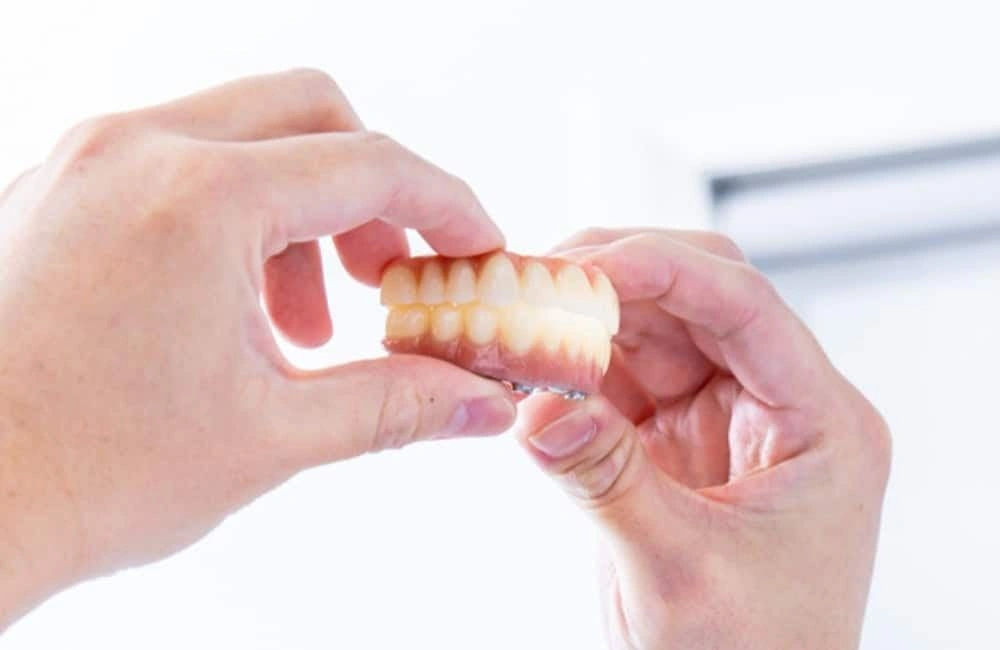
The world of dentures can feel like navigating a foreign language, especially when you’re faced with decisions about your oral health. Full dentures, partial dentures, immediate dentures; the terminology alone could fill a dictionary. Yet understanding the fundamental differences between these types of dentures can transform what feels like an overwhelming choice into a clear path forward.
In North Western Melbourne, where our diverse communities span from young families to established retirees, the need for tooth replacement solutions touches every demographic. According to Australian Institute of Health and Welfare data, 32% of adults aged 65 and over have no natural teeth, while younger adults increasingly seek solutions for missing teeth due to injury, decay, or genetic factors.
The distinction between full and partial dentures isn’t merely academic, it’s the difference between addressing complete tooth loss and working around your remaining natural teeth. Each approach carries its own advantages, challenges, and considerations that extend far beyond the initial fitting.
Understanding Full Dentures: The Complete Solution
Full dentures, also known as complete dentures, replace all teeth in either the upper or lower arch, or both. These prosthetic devices rest directly on your gum tissues and underlying bone, relying on suction, adhesives, and careful design for retention and stability.
The journey to full dentures typically begins when all remaining teeth in an arch are no longer viable. This might result from advanced gum disease, extensive decay, trauma, or simply the natural progression of oral health challenges over time.
Upper full dentures generally offer better retention than their lower counterparts, thanks to the larger surface area and natural suction created against the palate. Lower full dentures face the challenge of competing with tongue movement and having less surface area for stability.
The timeframe for full denture treatment varies considerably. Immediate full dentures can be placed on the same day as tooth extractions, allowing you to leave with teeth in place. However, conventional full dentures require 8-12 weeks of healing time after extractions, during which your gums and bone reshape themselves.
Modern full dentures bear little resemblance to the awkward devices of previous generations. Today’s materials and techniques create dentures that can look remarkably natural, with tooth colours and gum shades carefully matched to complement your complexion.
Partial Dentures: Working with What Remains
Partial dentures represent a middle ground between individual tooth replacement and complete denture therapy. These removable appliances replace multiple missing teeth while utilising your remaining natural teeth for support and retention.
The beauty of partial dentures lies in their ability to prevent further tooth loss. When teeth go missing, the remaining teeth often shift position, creating gaps, bite problems, and increased risk of further loss. A well-designed partial denture acts as a space maintainer, preserving your existing oral architecture.
Partial dentures come in several varieties. Cast metal partials offer superior strength and longevity, with precision attachments that can virtually disappear when you smile. Flexible partials, made from thermoplastic materials, provide excellent aesthetics and comfort, particularly for patients with metal sensitivities.
The design process requires careful evaluation of your remaining teeth. These teeth must be healthy enough to support the additional load placed by the partial denture. Sometimes, this means addressing decay, gum disease, or structural problems before proceeding with treatment.
Unlike full dentures, partials don’t require extraction of healthy teeth. This conservative approach preserves natural tooth structure while addressing functional and aesthetic concerns.
The Clinical Decision: Full vs Partial
The choice between full and partial dentures isn’t always straightforward. Sometimes, the decision involves weighing the long-term prognosis of questionable teeth against the benefits of a fresh start with full dentures.
Dentists consider multiple factors when recommending treatment. The health and structural integrity of remaining teeth plays a crucial role. Teeth with extensive decay, advanced gum disease, or poor root structure may not provide adequate support for partial dentures.
Your overall oral health history matters significantly. Patients with a history of extensive dental problems might benefit from the predictability of full dentures rather than the ongoing maintenance requirements of partial dentures anchored to potentially problematic teeth.
Age and lifestyle considerations influence the decision as well. Younger patients typically favour approaches that preserve natural teeth when possible, while older patients might prioritise simplicity and predictability over tooth preservation.
Comfort, Function, and Daily Life
The adaptation process differs significantly between full and partial dentures. Partial dentures typically feel more familiar because they work alongside your natural teeth, providing reference points for bite and tongue position. Full dentures require relearning basic functions like chewing and speaking.
Eating with full dentures demands patience and practice. Hard or sticky foods may need to be avoided initially, and some patients never regain the ability to eat certain foods comfortably. Partial dentures generally allow for better chewing function, as natural teeth continue to provide feedback about bite force and food texture.
Speech adaptation varies between individuals but tends to be less challenging with partial dentures. Full dentures can initially affect pronunciation, particularly sounds requiring tongue-to-tooth contact. Most patients adapt within several weeks.
Social confidence often recovers more quickly with partial dentures, as they feel more secure and familiar. Full denture wearers may initially worry about slipping or clicking, though modern techniques and materials have greatly reduced these concerns.
Modern Alternatives and Solutions
The landscape of tooth replacement has evolved dramatically, offering alternatives that blur the traditional lines between types of dentures. Implant-supported dentures combine the comprehensive coverage of full dentures with the stability of dental implants.
All On 4 Plus® represents one such evolution, using strategically placed implants to support a full arch of teeth. This approach eliminates many traditional denture disadvantages while providing the comprehensive restoration that full dentures offer.
Implant-supported bridge can replace multiple missing teeth without relying on natural teeth for support. This approach preserves healthy teeth while providing superior stability compared to traditional removable partial dentures.
Some patients benefit from combination therapy, using partial dentures in one arch and full dentures in another, depending on the specific pattern of tooth loss and oral health factors.
Your Path Forward
At Dental Couture in Sunbury, serving North Western Melbourne communities, we understand that denture decisions affect every aspect of daily life. Our approach combines traditional craftsmanship with modern technology to create dentures that fit comfortably and look natural.
We utilise digital impression techniques and advanced materials to ensure optimal fit and aesthetics. The decision between full and partial dentures deserves careful consideration and expert guidance, taking into account your oral health, lifestyle, and personal preferences.
Whether you’re considering traditional denture options or exploring modern alternatives like All On 4 Plus®, we provide comprehensive treatment planning. For patients who might benefit from veneers on remaining natural teeth alongside partial dentures, or those considering Invisalign to optimise tooth position before denture treatment, we address all aspects of your smile restoration.
Contact Dental Couture today to schedule your consultation. Call us or complete our online enquiry form to take the first step toward understanding which types of dentures might be right for you.