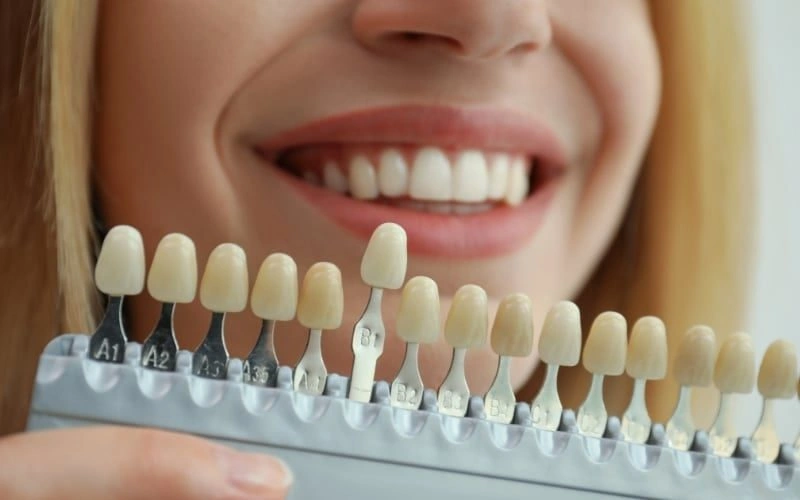
There’s something unsettling about perfection when it comes to teeth. Those unnaturally white, uniformly shaped veneers that scream “dental work” from across a room have given cosmetic dentistry a reputation for artificiality that the industry has spent decades trying to overcome. The irony? Natural teeth are beautifully imperfect, and the art of creating natural veneer appearance lies in celebrating these imperfections rather than eliminating them.
In Australia, where veneer treatments have become increasingly sophisticated, the demand for authenticity has driven remarkable advances in materials and techniques. According to Australian dental industry data, 78% of patients now specifically request natural-looking results over the bright white, uniform appearance that was once considered the gold standard.
The challenge isn’t simply making veneers look like teeth, it’s making them look like your teeth. Natural veneer appearance requires understanding how light interacts with tooth structure, how surface textures create visual interest, and how subtle variations in colour and translucency combine to create the optical illusion we call a natural smile.
The Optical Complexity of Natural Teeth
Natural teeth are far more complex than they appear at first glance. What looks like a simple white surface is actually a sophisticated optical system involving multiple layers, each with different properties that affect how light behaves.
The outermost layer, enamel, is highly mineralised and translucent, allowing light to penetrate several millimetres before reflecting back. This translucency gives teeth their characteristic depth and vitality. Beneath the enamel lies dentine, which provides the underlying colour that shows through the translucent enamel layer.
This layered structure creates what dental professionals call “opalescence”, or the subtle play of colours that shifts as light hits teeth from different angles. Natural teeth can appear slightly blue-white when viewed straight on, yet show warmer tones when light strikes them from the side.
The surface of natural enamel isn’t uniformly smooth either. Under magnification, it reveals subtle ridges, valleys, and irregularities that break up light reflection, preventing the flat, artificial appearance of overly polished surfaces. These microscopic variations scatter light in ways that create visual interest and depth.
Age also affects natural appearance. Younger teeth tend to have more pronounced translucency at the incisal edges, while older teeth often show more opacity and colour variation. Understanding these age-related changes helps create veneers that look appropriate for each individual patient.
Modern Materials: Engineering Natural Beauty
The evolution of veneer materials has been driven largely by the pursuit of natural veneer appearance. Early veneers relied on uniform ceramic materials that, while durable, lacked the optical complexity of natural teeth. Today’s advanced ceramics can mimic virtually every aspect of natural tooth structure.
Lithium disilicate ceramics represent a significant breakthrough in achieving natural appearance. These materials can be layered and characterised to replicate the complex optical properties of natural enamel and dentine. The translucency can be varied throughout the veneer, creating the subtle gradations that make teeth appear natural.
Feldspathic porcelains offer even greater customisation potential. These materials contain glass particles that scatter light similarly to natural enamel crystals, creating the opalescent effects that are hallmarks of authentic-looking teeth.
Ultra-thin veneers, sometimes as thin as 0.3mm, preserve more natural tooth structure while still achieving dramatic aesthetic improvements. These minimal-preparation veneers require exceptional skill to create natural veneer appearance, as there’s less material to work with in building optical effects.
Surface Texture: The Devil in the Details
Creating natural veneer appearance requires meticulous attention to surface texture. Natural teeth aren’t smooth – they feature subtle undulations, ridges, and irregularities that evolved to enhance function while creating visual interest.
These surface variations serve multiple purposes. Functionally, they help break food particles during chewing and provide grip for the lips during speech. Aesthetically, they scatter light in ways that prevent the flat, artificial appearance of overly polished surfaces.
The incisal edge, where upper and lower teeth meet, typically shows the most texture variation in natural teeth. This area often features subtle chips, wear patterns, and irregularities that develop over years of use. Replicating these characteristics requires both technical skill and artistic sensibility.
Younger patients typically have more pronounced surface textures, including developmental ridges called mamelons that appear as small bumps along the incisal edges of newly erupted teeth. Older patients may show wear patterns, slight chips, or other age-appropriate characteristics that contribute to natural appearance.
Translucency Mapping: Light’s Journey Through Teeth
Natural teeth exhibit varying degrees of translucency throughout their structure. The incisal edges are typically more translucent, creating a subtle blue-white halo effect when backlit. Moving toward the gum line, teeth generally become more opaque, with the underlying dentine colour becoming more apparent.
This translucency gradient is crucial for natural veneer appearance. Uniform translucency throughout the veneer creates an artificial look, while carefully mapped variations create the depth and vitality associated with natural teeth.
The cervical area, near the gum line, typically shows warmer, more saturated colours with less translucency. This is where the dentine colour has the greatest influence on overall appearance. Skilled ceramists use this knowledge to create natural-looking colour transitions within each veneer.
Incisal translucency must be carefully balanced. Too much translucency can make teeth appear grey or lifeless, while too little creates an opaque, artificial appearance. The goal is to achieve the subtle translucency that allows light to penetrate and reflect back with natural warmth and vitality.
Colour Harmony and Individual Characterisation
Natural veneer appearance requires more than matching the average colour of surrounding teeth. Natural teeth exhibit subtle colour variations within each tooth and between adjacent teeth that contribute to authenticity.
These internal colour variations, called characterisations, include everything from subtle colour bands to tiny spots that mimic the mineral variations found in natural enamel. When recreated skilfully in veneers, these characteristics make the restorations virtually indistinguishable from natural teeth.
The gum line area typically shows more saturation and warmth, while the incisal edges appear cooler and more translucent. This colour gradient must be carefully recreated in veneers to achieve natural appearance.
Adjacent teeth rarely match exactly in natural smiles. Slight variations in colour intensity, hue, and translucency contribute to the authentic appearance of natural dentition. When creating multiple veneers, these subtle variations must be intentionally incorporated to avoid the uniform appearance that screams “dental work.”
Crafting Your Natural Smile
At Dental Couture in Sunbury, creating natural veneer appearance represents the intersection of art and science. Our approach involves detailed photography, colour mapping, and close collaboration with master ceramists who understand the nuances of natural tooth appearance.
We utilise advanced shade-matching technology combined with artistic evaluation to ensure your veneers integrate seamlessly with your natural teeth. Our process includes temporary mock-ups that allow you to preview and refine the appearance before final fabrication.
The relationship between dentist and ceramist is crucial for achieving natural veneer appearance. Our laboratory partnerships are built on shared commitment to authenticity, with ceramists who understand that the goal isn’t perfection – it’s natural beauty that enhances your individual characteristics.
For patients considering comprehensive smile makeovers, we often combine veneers with other treatments like Invisalign to optimise tooth position before veneer placement, ensuring the most natural possible result.
Creating natural veneer appearance requires expertise in materials science, optical principles, and artistic sensibility. The goal isn’t to create perfect teeth – it’s to create perfectly natural-looking teeth that enhance your individual beauty.
Contact Dental Couture today to schedule your consultation. Call us at 13COUTURE 03 4157 2211 or complete our online enquiry form to discover how modern veneer techniques can enhance your smile while maintaining complete natural veneer appearance.