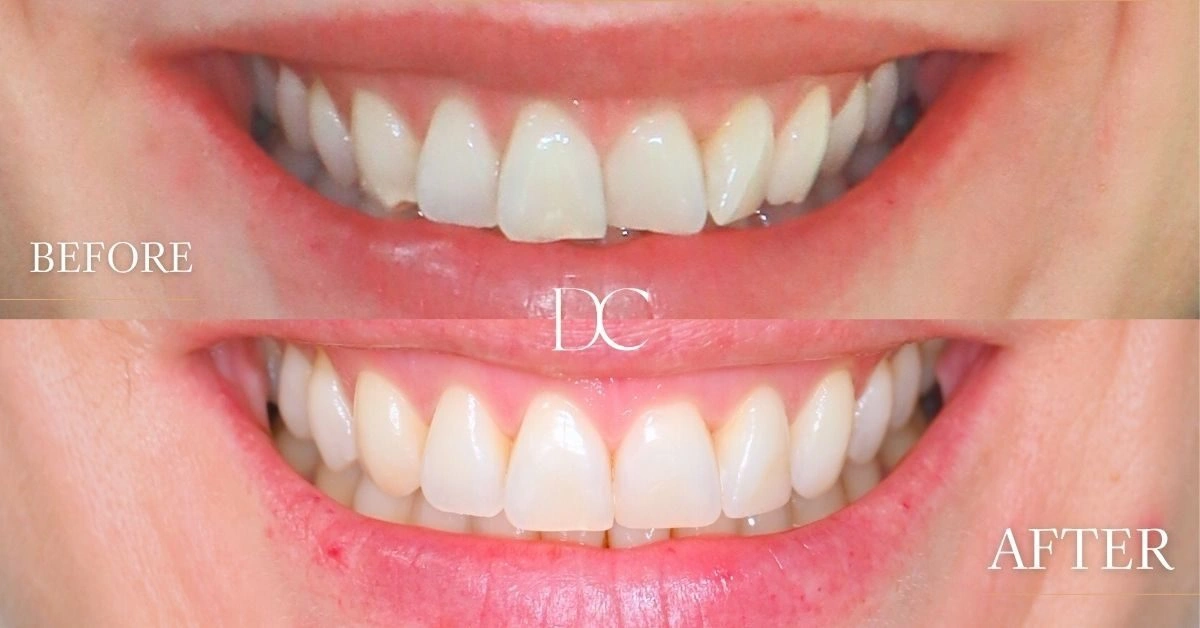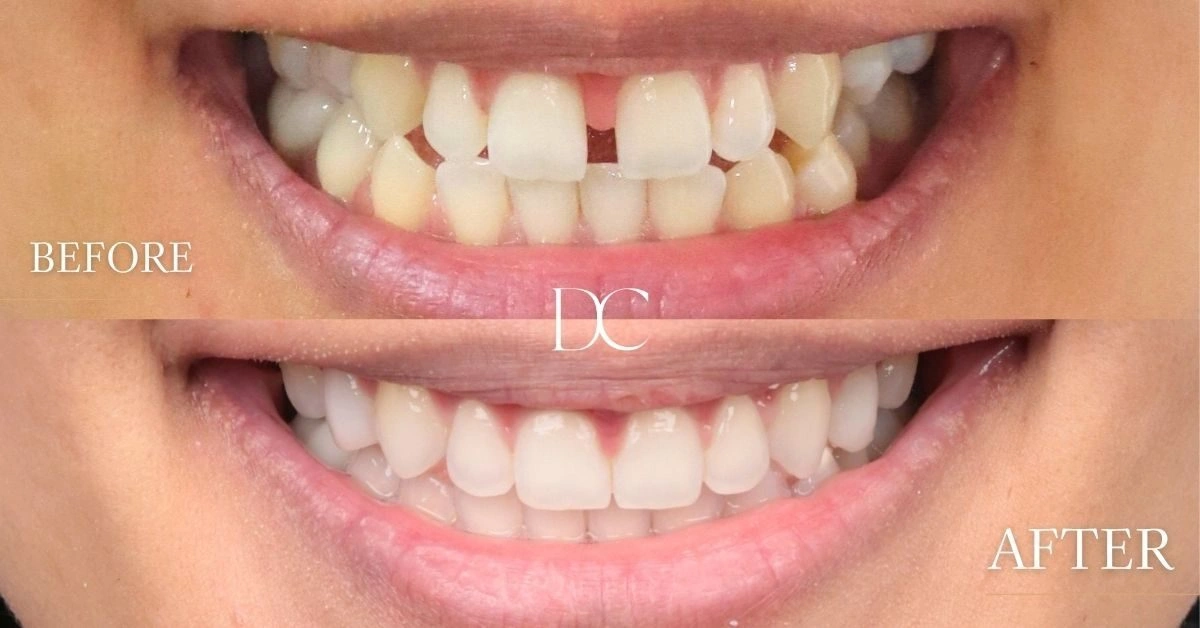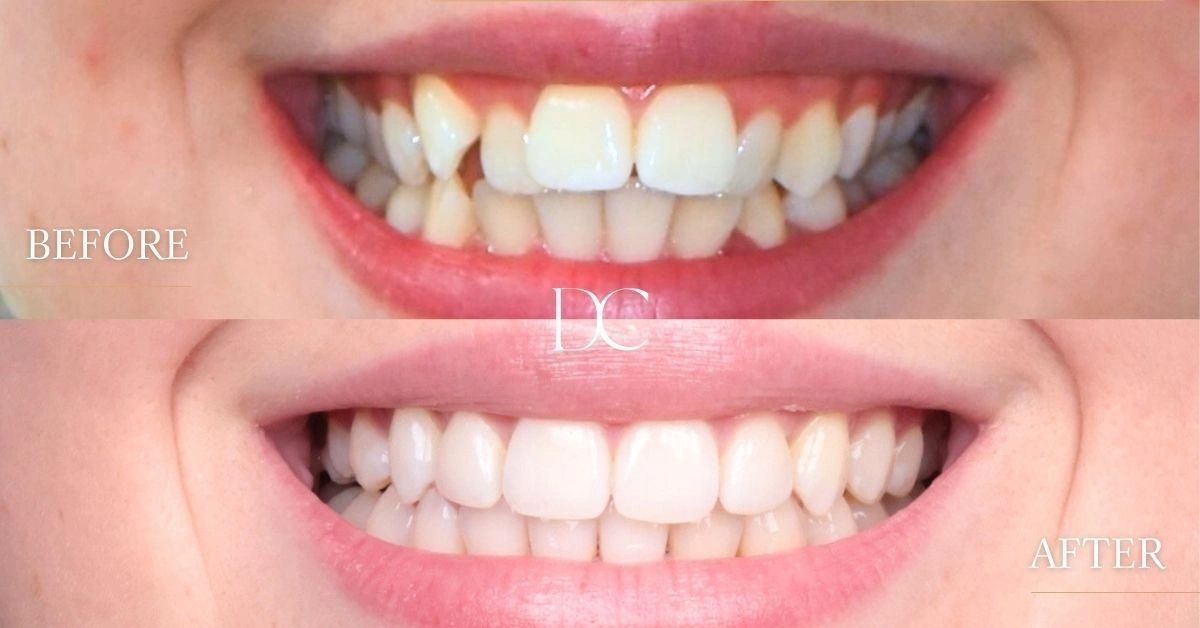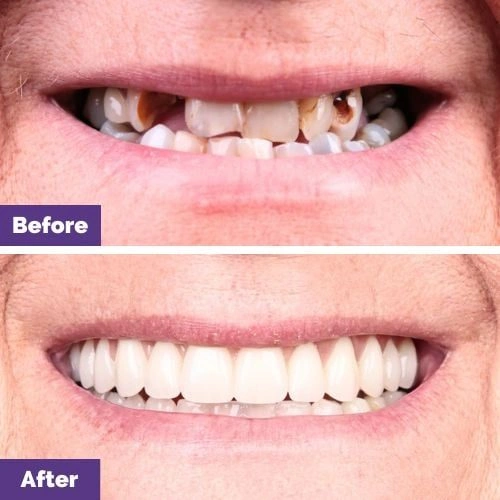
Presenting Clinical Problem
A patient presented with post-endodontic discolouration requiring non-vital tooth whitening intervention.
- Single Tooth Discolouration: Darkening of endodontically treated anterior tooth
- Post-Root Canal Colour Change: Progressive darkening following pulp tissue removal
- Aesthetic Disparity: Significant colour difference between treated tooth and adjacent natural dentition
- Intact Tooth Structure: Otherwise sound tooth structure following successful endodontic therapy
The primary clinical objective was to lighten the discoloured endodontically treated tooth to achieve improved colour harmony with adjacent natural teeth.
Treatment Plan & Clinical Process
An internal bleaching approach was developed to address post-endodontic discolouration through intra-coronal whitening.
Phase 1: Clinical Assessment: Shade analysis established baseline discolouration severity and target colour parameters. Radiographic evaluation confirmed adequate endodontic obturation and absence of periapical pathology. Clinical examination verified tooth structure integrity.
Phase 2: Access Preparation: The existing access cavity was reopened and any remaining pulp chamber debris was removed. The canal space was sealed coronally to prevent bleaching agent penetration into root canal system.
Phase 3: Internal Bleaching Application: Whitening agent was placed within the pulp chamber using walking bleach technique. The access cavity was temporarily sealed. Treatment duration was calibrated based on discolouration severity and whitening response.
Phase 4: Final Restoration: Once target shade was achieved, the bleaching agent was removed, the chamber was cleaned, and the access cavity was permanently restored using adhesive materials.
Clinical Outcome
The internal bleaching procedure addressed post-endodontic discolouration through intra-coronal whitening. The treatment lightened the darkened tooth structure.
Individual responses to internal bleaching vary significantly. Outcomes depend on factors including discolouration cause, tooth structure characteristics, and treatment duration. Some discolouration may not respond completely to bleaching. Colour rebound (gradual darkening after treatment) occurs in some cases. Treatment success cannot be guaranteed, and complications may require additional intervention including ceramic restoration.
Frequently Asked Questions for Sunbury Patients
Why do root canal treated teeth become discoloured?
Endodontically treated teeth can darken when pulp tissue is removed during root canal therapy. Decomposition products from remaining pulp tissue, haemoglobin breakdown, and certain endodontic materials contribute to discolouration. Internal bleaching addresses these changes by whitening from inside the tooth.
How does internal bleaching differ from external whitening?
External tooth whitening treats vital teeth from the outside surface. Internal bleaching treats non-vital (root canal treated) teeth from the inside out. The bleaching agent is placed inside the tooth’s pulp chamber where the discolouration originates, as external whitening cannot adequately reach internal staining.
Is internal bleaching permanent?
Internal bleaching results are not necessarily permanent. While many patients maintain improved tooth colour for several years, colour rebound can occur over time in some cases. If significant darkening recurs, the procedure can potentially be repeated, or alternative treatments such as veneers or crowns may be considered.